Sunday, 17 February 2019

Airbus C295 Aircraft Supplier, Specs, Engine, Cockpit, and Price

22:10
Airbus C295 Aircraft Supplier, Specs, Engine, Cockpit, and Price – Airbus C295 is a new generation tactical airlifter in the light and medium segment. It is strong and reliable but also very flexible in terms of the number of different missions that can be done.

Airbus C295W conducts multi-role operations worldwide in all weather conditions. It is fully certified and routinely operates day and night in combat missions in all extreme weather, from deserts to maritime environments, from extreme heat to extreme cold temperatures.
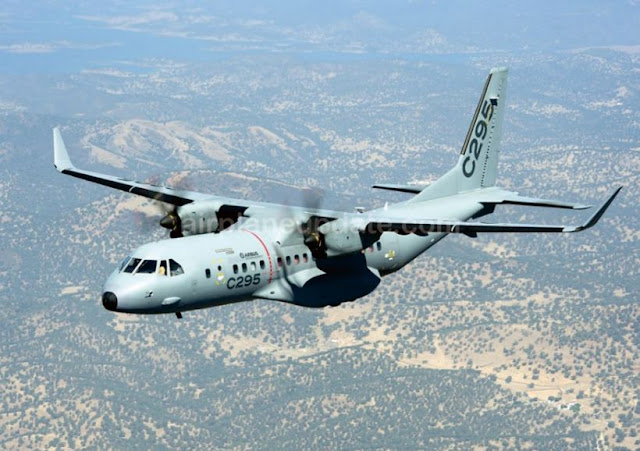
Airbus C295 aircraft

Airbus C295 Specs

The Airbus C295 is equipped with the Highly Integrated Avionics System (HIAS), a sophisticated integrated avionics system based on the Thales Topdeck Avionics suite. Flexible architectural concepts and the use of dual civil / military technology equipment ensure the success of tactical missions, growth potential for future equipment and compatibility with the latest civil airspace environments.

The longest cabin, optimized for daily missions. With a length of 12.7 m / 41 ft 8, the Airbus C295 has the longest unobstructed cabin in its class. It can accommodate up to 71 seats, offering the ability to carry personnel that is far higher than its competitors in this segment. For the same reason, it can carry more pallet loads (up to five standard 88-inch X 108-inch HCU-6E palettes) by loading directly through the rear ramp door.

The Airbus C295's STOL capability combined with a strong landing gear allows it to operate in the most difficult locations with the worst conditions for takeoff and landing. This aircraft is tactical military transportation with lightweight footprints to allow for short operations (no more than 670 m / 2,200 feet), soft and rough runways (CBR 2) are not ready. The Airbus C295 is also designed to provide exceptional low-level flight characteristics for tactical missions, flying at speeds of up to 110 kt.

The key to Airbus C295's unique patrol and surveillance capabilities is the Fully Integrated Tactical System (FITS) that integrates, controls and displays mission sensors, increases mission awareness and facilitates decision making.

Airbus C295 engine specs

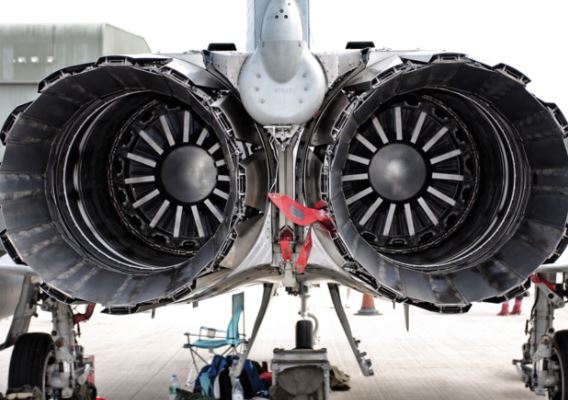
Airbus C295 Engines

Airbus C295 aircraft is powered by two Pratt & Whitney Canada turb12rop PW127G engines, each rated 1,972kW and 2,177kW with automatic power reserves. The engine drives an HS-568F-5 six-bladed composite propeller developed by Hamilton Sundstrand. Blades, 3.89 m in diameter, have autofeathering and synchronization.

This aircraft carries 7,700l of fuel, giving a maximum distance of 5,630 km. It can be equipped with an optional probe for probe and drogue refueling, so that its range can be extended by refueling in flight.

The left engine is equipped with propeller brakes: while on the ground, the gas engine generator can function in APU mode with the propeller stopping to generate electricity and air flowing into the aircraft system. The propeller brake system provides the same ground-power function as a conventional on-board APU with a fraction of the cost, weight and complexity.

Now, with the new Airbus C295W version equipped with winglets, this aircraft is capable of carrying more cargo at greater distances in typical hot and high conditions of various countries included in this regional tour, resulting in fuel savings of around 4% and increased safety margins in the mountains.

Today's Armed Forces have increased demands for various air transportation missions. And no matter what the requirements for operations are, Airbus C295 is ready to carry out its mission successfully.

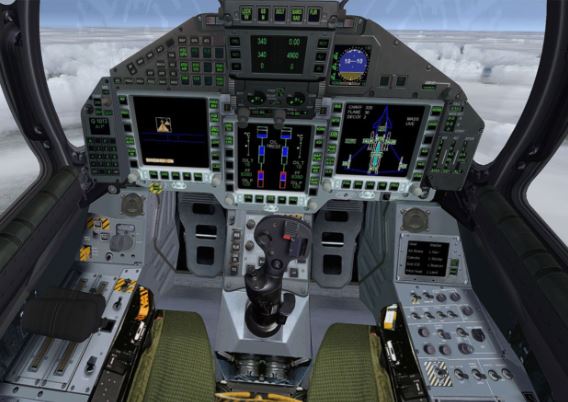
Airbus C295 cockpit

Airbus C295 Variant

High flexibility, many variants, many missions, one plane. Most of the different variants can be easily reconfigured to the transport version and back, because of the modular palletized mission system.

Airbus C295 Surveillance and Reconnaissance version with multi-mission radar that can also be armed to carry out effective Air Cover operations.

In its Early Airborne Warning version, the Airbus C295 carries a sophisticated AESA radar for 360 Degrees coverage to provide a complete picture of airspace.

Airbus Bomber version is equipped with a versatile Roll-on / Roll-off system that converts Airbus C295 into an efficient Water Bomber to fight forest fires with up to 7000 liters of water or inhibitors.

Long reliable on the station in combination with the Fully Integrated Tactical System (FITS) making the Airbus C295 the perfect platform for Maritime Patrol and Anti-Submarine missions.

Complete interception of electromagnetic (ELINT) and communication (COMINT) emissions to get a high level of situational awareness and to produce intelligence excellence.

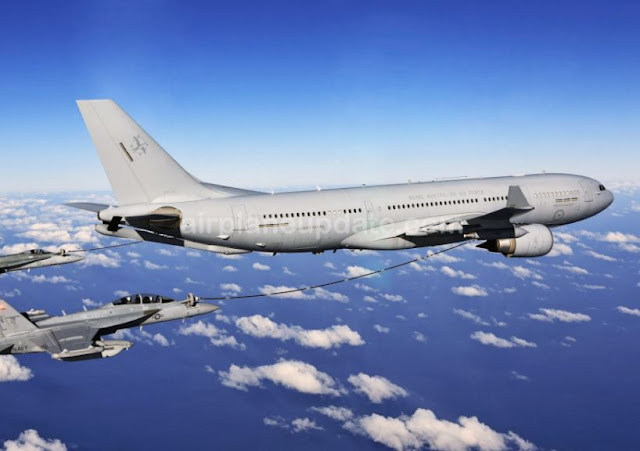
With a removable refueling kit, the Airbus C295 can be easily converted into a tanker aircraft capable of providing up to 6000kg of fuel for fixed and rotating wing receivers.

With the VIP seat module in boxes, the Airbus C295 presents a high level of comfort for short / unpaved airstrips in remote areas where ordinary VIP planes cannot land.

In the MEDEVAC configuration, the Airbus C295 can load up to 24 stretchers plus 7 medical personnel and even intensive care configurations are possible.

The toughness and versatility of the Airbus C295 makes it the ideal platform for all types of military or civilian operations for the benefit of society.

Airbus C295 aircraft have been proven to be combat and have successfully completed military missions in all types of environments. Routinely operating in hot and humid environments in the Brazilian forests and mountains of Colombia, in the deserts of Algeria and Jordan that are very hot and dusty, and in very cold winters and ice conditions in Poland and Finland. Airbus C295 has been successfully used during long deployments (up to two years, flying up to 90 hours per aircraft per month) in remote areas, such as Chad, Iraq and Afghanistan. Airbus C295 has become the most trusted airlifter in its category, used either as a single type of transportation, or as a versatile and efficient complement to heavy air transport and transport helicopters.

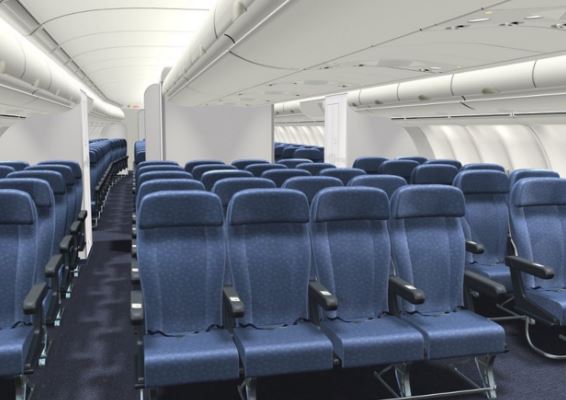
Airbus C295 cabin

Airbus C295 Supplier

The Airbus C295 is ideal for all types of Humanitarian missions for the benefit of society. Strong, sturdy, sturdy, and with exceptional low-level flight and short takeoff and landing characteristics from rough, soft and short airfields that aren't ready, but also up to eleven hours of flight barriers, the Airbus C295 is also equipped with Airbus Defense and Integrated Integrated Tactical System (FITS) A unique space allows all types of supervision and monitoring.

The Civil Activities of the Airbus C295 include surveillance and control activities such as search and rescue, monitoring illegal immigration, drug smuggling, piracy, illegal fishing, controlling and preventing marine pollution, illegal deforestation, bringing supplies to people living in remote locations. This was done by most operators, such as the Portuguese Air Force to patrol the large Portugal Economic Exclusive Zone (EEZ), including the area around the islands of Azores and Madeira. The Chilean Navy and the Brazilian Air Force also use Airbus C295 for search and rescue missions (SAR). Monitoring activities can be carried out thanks to FITS, which can be installed in a permanent or pallet solution.

Airbus C295 Price and Orders

The price of the latest Airbus C295 aircraft is US $ 28 Million. A total of 208 C295 aircraft have been ordered by 28 countries in December 2018. Out of this total, 168 aircraft have been sent and 166 are in operation.

In April 2005, Venezuela ordered ten C295 transport planes, but the US refused the export license needed to fill American aircraft and its order was revoked. Portugal ordered 12 C295 aircraft in February 2006, seven for military transportation and five for maritime surveillance. Deliveries began in November 2008 and have been completed.

Poland ordered two additional aircraft in October 2006 (shipped in September 2007) and two in October 2007 (shipped in 2009) to bring the fleet to 12 aircraft. Five more aircraft, valued at $ 262 million, were ordered in July 2012. The first two were sent in October 2012 and the third was in December 2012. The remaining aircraft were delivered in 2013.

In October 2007, the Chilean Navy bought three aircraft. The Colombian Air Force ordered four planes in November 2007. The first two shipments were made in June 2008, while the third and fourth were shipped in November 2008 and April 2009. Two more planes were ordered, one in September 2012 and the other in January 2013. the six aircraft were carried out.

The Czech Air Force ordered four C295 aircraft in May 2009. Deliveries began at the end of 2009 and ended in 2010. In February 2012, Indonesia ordered nine C295 aircraft. The first two were sent to the Indonesian Air Force in September 2012. In January 2019, there were 11 C295 aircraft operating with Indonesia.

In March 2012, the Kazakhstan Ministry of Defense ordered two aircraft. A Memorandum of Understanding (MoU) was also signed for six additional aircraft. Kazakhstan received the first two C295 aircraft in January 2013. Eight aircraft were sent.

Airbus Military received orders from Oman in May 2012 for the delivery of C295 aircraft in tactical transportation (five) and maritime patrol aircraft (three) configurations. In December 2018, the eight C295 aircraft operated.

The Egyptian Air Force ordered six C295 transport aircraft in January 2013 and eight additional C295 aircraft in July 2014. In January 2019, Egypt operated a fleet of 24 C295 aircraft. Mexico placed orders for two C295 aircraft for its Navy in October 2014. In January 2019, a total of 14 C295 aircraft operated with Mexican troops.

Saudi Arabia ordered four C295W aircraft in June 2015, with all aircraft operating in January 2019. The Philippine Air Force placed an order for four C295 aircraft, three of which were sent in February 2016.

Mali ordered a unit of the C295W transportation category in February 2016 and the aircraft operated with the Mali Air Force. The UAE made orders for medium transport aircraft C295 in November 2017 and shipments will begin in 2019.

Brazil ordered an additional unit of C295 search and rescue (SAR) aircraft in July 2014 and shipments were made in June 2017. In January 2018, Brazil ordered additional C295 aircraft. It took 13 shipments from 15 aircraft in January 2019.
Saturday, 16 February 2019

Airbus A330 MRTT Specs, Tangker, Interior, Cockpit, and Price

13:00
Airbus A330 MRTT Specs, Tangker, Interior, Cockpit, and Price – The Airbus A330 Multi Role Tanker Transport (MRTT) is an air refueling tanker aircraft based on the civilian Airbus A330. Version of the A330 MRTT, EADS / Northrop Grumman KC-45 proposed to the United States Air Force. 

Airbus A330 MRTT is the most powerful new generation tanker aircraft, with unique multi-role capabilities and proven battles today. Based on the successful Airbus A330-200 aircraft, the Airbus A330 MRTT is The Benchmark for a new generation of multi-role tankers.

Airbus A330 MRTT specs

Airbus A330 MRTT Specs

The Airbus A330 MRTT can carry up to 111 tons of fuel; this is the highest capacity of all tanker aircraft, even those that have an additional fuel tank on the cargo deck. It has a dismantling capacity of 50,000 kg of fuel to various recipients during a 4-hour transport mission at more than 1,000 nm from the take-off point.

The Airbus A330 MRTT can carry a maximum payload of up to 45 tons, combining the passenger cabin and lower deck: Up to 300 Passengers, MedEvac cabin layout with 40 stretchers, 20 seats for medical staff and 100 passengers, up to 37 tons of cargo on the lower deck, 27 LD3 containers or 8 military pallets.

Another typical mission is the spread of long-range fighter aircraft. The Airbus A330 MRTT can support the deployment of 4 fighters plus 50 personnel and 12 tons of goods (baggage, parts and equipment) on one direct flight of more than 5,200 km, eg from Europe to Afghanistan. With the actual wide body fuselage, the Airbus A330 MRTT is ideal for carrying all types of military or humanitarian cargo on strategic missions.

Equipped with attractive modern designs, the cabin is designed to ensure optimal seating configuration in each class, maximizing capacity and providing airline comfort. These features allow a complete set of configurations, from pure passengers and troop transport to complex adjustments needed for VIP guests. For example, it can hold 266 passengers in a typical two class configuration, or around 300 in a single class layout.

Airbus A330 MRTT tanker

Airbus A330 MRTT Tanker

The Airbus A330 MRTT is the most effective tanker based on its unmatched fuel capacity that allows it to reduce more fuel at a certain distance compared to any competitor. More fuel in the plane means more flexibility, more range and longer at the station. This exceptional fuel capacity allows the Airbus A330 MRTT to act as a style multiplier, thereby increasing the efficiency and effectiveness of fast jet operations.

To refuel aircraft equipped with containers such as the F-16 Fighting Falcon, F-35A Lightning II, or even the Airbus A330 MRTT itself (if equipped with UARRSI), the Airbus A330 MRTT is equipped with an advanced Airbus Defense & Space Aerial Refueling Boom System (ARBS). Rapid fuel flow rates (up to a maximum of 3600 kg / min - 1,200 US gal / min) make the most powerful new generation Boom ARBS available. Very good handling quality is provided for the operation of the ARBS, which is assessed by an independent assessment.

Under-wing Pods provide simultaneous filling of Hose and Drogue with a high fuel disassembly rate (1300 kg / min - 420 US gal / min), enabling the recipient to minimize refueling time and improve operating efficiency.

Cobham 905E Under-Wing Pods, currently in service and proven in operation, allow the Airbus A330 MRTT to refuel NATO receivers or allied Probe receivers such as Eurofighter, Tornado, Jaguar, F / A18 Hornet or Sukhoi 30 Airbus A330 MRTT physical compatibility with receivers around the world made, demonstrated, and certified to enable coalition interoperability.

Series 900 Wing-Pods combine drum units Hoses are digitally controlled and electrically operated, optimizing reliability and maintenance.
Large aircraft equipped with probes such as A400M or C295, can be filled with fuel, with a high fuel loading rate of 1800 kg / min - 600 US gal / min through the Cobham 805E Airplane Fuel Filling Unit (FRU).

FRU, a removable Hose and Drogue unit, allows refueling receivers with different types of fuel. This option ensures that NATO fuel types will be transferred from the Wing-Pods, while alternative types of fuel are removed from the FRU.

The Air-to-Air Recharge System (AAR) is controlled from an advanced Fuel Operator Console positioned in the cockpit, thus enhancing the safety of AAR operations by ensuring the reaction of the flight crew on time and synchronized to unexpected events. It is also equipped with an Enhanced Vision System, a 2D / 3D high definition digital system that allows refueling day and night and can provide high resolution video recording from refueling operations.

Airbus A330 MRTT cabin

Airbus A330 MRTT Cargo Capabilies

The Airbus A330 MRTT is capable of carrying loads up to 45 tons / 99,000 lb. The versatility of the Airbus A330 MRTT allows cargo to be stored comfortably on the lower deck in a variety of cargo options including a variety of under-floor cargo containers. and pallets, ranging from LD1 to LD3 and LD6, and the standard NATO 463-L military pallet 88 × 108 inches. Some cargoes can also be carried as "bulk" non-pallets.

The Airbus A330 MRTT is also a strategic aeromedical evacuation aircraft (MedEvac). Its large fuselage allows a maximum flexibility of up to 130 NATO stretchers to be carried through intercontinental distances. In a med medevac configuration, medical beds can be installed on designated folding chairs. This allowed the aircraft to be used as transport troops on the relief mission out, with medical beds stored in the lower cargo compartment, and then quickly converted to MedEvac when returning. In the 'MedEvac Intensive' configuration, a critical care module can be installed to replicate the intensive care unit in the air. This aircraft can usually carry 28 NATO stretchers, up to six critical care modules, 20 seats for medical staff, and 100 passenger seats.

Airbus A330 MRTT Price and Orders

The price of the latest Airbus A330 MRTT aircraft is US $ 300 Million. The A330 MRTT has been ordered by the Australian Air Force (RAAF), Royal Air Force (RAF), Saudi Air Force (RSAF), French Air Force (Armée de l'Air), United Arab Emirates Air Force, Republic of Singapore Air Force (RSAF), and others. Twelve countries have made strict orders for around 60 aircraft, 33 of which have been sent at the end of 2018.

Friday, 15 February 2019

Eurofighter Typhoon Specs, Cockpit, Engine, and Price

17:30
Eurofighter Typhoon Specs, Cockpit, Engines, and Price – Eurofighter Typhoon is the most modern jet role swing fighter in the world. Having been compiled as a multi-national program to modernize the European Air Force. The temporary Eurofighter Typhoon has been sold to 5 additional customers (Austria, the Kingdom of Saudi Arabia, Sultanate of Oman, Kuwait and Qatar) and thus doubled the number of the original user country.

Aircraft development was carried out by Eurofighter GmbH, based in Munich and fully owned by BAE Systems from the United Kingdom, Alenia Aeronautica from Italy and EADS Deutschland (formerly DaimlerChrysler) and EADS Spain (formerly CASA). In January 2003, Norway signed an agreement for industrial participation in the project, but had not yet committed to buying fighter planes.

Eurofighter Typhoon Jet

Eurofighter Typhoon Specs

In an air superiority mission, Eurofighter Typhoon will usually be equipped with air-to-air missiles for BVR and short-range combat. This is a combination of thrust, maneuverability, modern sensors and data integration that makes the Eurofighter Typhoon a superior air war platform.

In the role of an air ban, the Eurofighter Typhoon is configured for ground attacks equipped with targeting pods and up to 7 ground attack weapons, it can still carry 3 BVR and 2 SR missiles. The recent integration contract for Brimstone has strengthened the CAS capabilities of Eurofighter Typhoon because it can now engage in combat with a reduced risk of collateral damage from non-combatant or friendly forces.

Eurofighter Typhoon can easily switch from air to air to the role of air to land and back in the same mission. Various air-to-air and ground attack load configurations can be placed under 13 wing stations and airframe that allow mission-specific configuration and are very flexible.

Eurofighter Typhoon is the world's most advanced new generation multi-role / swing-role fighter available on the market. This is the culmination of the collaboration technology of Britain, Germany, Italy and Spain in avionics, aerodynamics, materials, manufacturing techniques and machinery. Eurofighter Typhoon is the largest military collaboration program in Europe. Eurofighter Typhoon is the only fighter that offers extensive operational capabilities while at the same time providing unparalleled fleet effectiveness.

Eurofighter Typhoon Weapons

An internally mounted BK27mm Mauser gun is a revolver pistol system with a closed-unconnected ammunition feed system. Eurofighter Typhoon has 13 hard points for transporting weapons, four under each wing and five under the fuselage. The weapons control system (ACS) manages the selection of weapons and shoots and monitors the status of weapons.

Depending on the role, fighters can carry the following missile mixes:

  • Air-superiority - six BVRAAM (beyond visual range) / AMRAAM air-to-air missiles in semi-hidden stations and two ASRAAM short-range air-to-air missiles on outer poles
  • Air ban - four AMRAAM, two ASRAAMs, two cruise missiles, and two anti-radar missiles (ARM)
  • SEAD (enemy air defense suppression) - four AMRAAM, two ASRAAM, six anti-radar missiles
  • Multirole - three AMRAAM, two ASRAAM, two ARM, and two GBU-24 Paveway III / IV
  • Close air support - four AMRAAM, two ASRAAM, 18 Brimstone anti-armor missiles
  • Four maritime attacks - AMRAAM, two ASRAAMs, six anti-ship missiles
  • UK RAF has chosen MBDA Meteor for BVRAAM and Raytheon AMRAAM requirements until Meteor enters service. Meteor uses a new air-jet ramjet motor to increase range and maneuverability. Meteors will be installed starting around 2013.

Eurofighter Germany, Italy and Spain carry IRIS-T infrared air-to-air missile imaging developed by Diehl BGT Defense of Germany. Deliveries began in December 2005. German and Spanish aircraft were also armed with off-line Taurus KEPD 350 missiles from EADS / LFK and Saab Bofors Dynamics, which have a range of more than 350 km.

UK RAF Eurofighters carrying MBDA Storm Shadow / Scalp EG launch cruise missiles, which entered operational services on Tornado aircraft in March 2003, and Brimstone MBDA anti-armor missiles, which entered service with initial operational capability (IOC) in Tornado GR.Mk RAF Aircraft in March 2005. Italian aircraft were also armed with Storm Shadow.

Eurofighter Typhoon engines

Eurofighter Typhoon Engines

Eurofighter Typhoon is powered by two EJ200 engines that provide an impressive thrust-to-weight ratio and maneuverability. The essence of this advanced weapon system is its sensor identification and fusion capability, based on the AESA CAPTOR-E radar and the temporary FLIR PIRATE sensor protected by the Electronic Defensive Sub System PRAETORIAN (DASS). There are no other fighter planes that have a number of European and US weapons that are comparable and combat ready regardless of their mission.

Eurofighter Typhoon specs

Eurofighter Typhoon Sensors

Eurofighter Typhoon aircraft is equipped with a multimode CAPTOR X-band pulse Doppler (ECR 90), developed by the Euroradar consortium. The multimode radar has three support channels. The third channel is used for jammer classification, interference blanking and nulling sidelobe. Euroradar is led by Selex Sensor and Airborne Systems, with Indra from Spain, FIAR from Italy and EADS Defense Electronics from Germany.

In May 2007, a version of the active electronic scanning (AESA) CAPTOR array, developed by Euroradar, was successfully flown with a trial at Eurofighter. Radar is called CAESAR (CAPTOR AESA).

PIRATE (passive air duct equipment) is installed on the side of the fuselage, in front of the windshield. PIRATE has been developed by the EUROFIRST consortium which consists of Galileo Avionica (FIAR) Italy (main contractor), Thales Optronics from the UK (system technical authority) and Tecnobit from Spain.

PIRATE is operated on 3-5 spectral bands and 8-11 microns. By using radar in the air-to-air role, radar works as a search and tracking system (IRST), which provides detection and repair of passive targets.

In the air-to-surface role, he made several acquisitions and set targets, and provided navigation and landing assistance. PIRATE provides images that can be directed to the helmet installed by the pilot.

In September 2005, Ultra Electronics was contracted to supply the Rafael Litening EF laser targeting pod for UK RAF Cyclone. The German AF plane is also equipped with a Litening pod.

Eurofighter Typhoon Cockpit and Avionics

Eurofighter Typhoon cockpit has three multifunctional head-color displays (MHDD) that show tactical situations, system status and EADS digital map display. An international consortium, EuroMIDS, which includes the US Data Link Solution, supplies a low volume MIDS terminal that provides Link 16 capabilities for secure data transfer.

Eurofighter Typhoon aircraft pilot control system is a sound throttle and stick (VTAS) system. Sticks and throttles have 24 home fingertip controls for sensor and weapon control, management of defense aids, and aircraft handling. Direct voice input allows the pilot to select the mode and procedure for data entry using voice commands.

The quadruplex fly-by-wire flight control system has an automatic low speed recovery system (ALSR) that provides pilots with low visual and audio speed warnings and will, if necessary, automatically take control of the aircraft and return to safe flights.

Helm mounted symbology system (HMS) equipped with BAE Systems and head up view showing flight reference data, weapons that point and signal, and FLIR imagery. The TERPROM BAE system for proximity proximity warning systems is being installed.

Raytheon Systems Ltd. supplies the anti-hour global positioning system (GPS) for tranche 2. Northrop Grumman was awarded a contract in August 2010 for the inertia measurement unit (IMU) to be installed in tranche 3A. IMU will be equipped with sensor inertia and built-in redundancy. It was built as part of an aircraft flight control system.

Eurofighter Typhoon cockpit

Eurofighter Typhoon Price and Orders

The price of the latest Eurofighter Typhoon aircraft is US $ 101 Million. Total of 620 Eurofighter Typhoon aircraft have been ordered by four program countries. Austria has ordered and received 15 aircraft. The other 72 have been ordered by the Kingdom of Saudi Arabia and shipments began in June 2009.

The Kingdom of Oman ordered 12 Eurofighter Typhoon in 2012 with shipments to begin in 2017. In September 2015 the State of Kuwait and Italy signed an MoU to supply 28 Eurofighter Typhoon with shipments starting from 2019.

The final assembly of the series production aircraft went smoothly in four countries. Deliveries to five partner countries began in 2003. Kingdom of Qatar signed a contract in December 2017 for 24 aircraft (20 single seats and 4 twin seats) with shipments beginning at the end of 2022.

Thursday, 14 February 2019

Airbus A400M Atlas Specs, Engines, Cockpit, and Price

21:49
Airbus A400M Atlas Specs, Engines, Cockpit, and Price – The Airbus A400M is the confirmed, qualified and in functions Most Innovative Airlifter with Twenty-first Millennium State-of-the-Art Technological innovation. The Airbus A400M can airlift in its huge freight keep most of the crucial army devices which do not fit any longer in past creation ideal airlifters such as huge chopper or an huge infantry battling automobile or an huge comfort excavator. Thanks to its Mixed Strategic and Tactical Abilities, the Airbus A400M has confirmed better range/ speed/ altitude/ payload/ ideal efficiency than past creation ideal airlifters allowing the distribution of Game-Changing Abilities to the Factor of Need that is to say next to a natural catastrophe or a cinema of functions where ideal airlifters cannot function. The Airbus A400M allows cost-effective and fast reaction to downturn.

Airbus A400M Atlas

The Airbus A400M was released in May 2003 to reply to the combined needs of seven Western Countries regrouped within OCCAR (Belgium, France, Germany, Luxemburg, Spain, Turkey and the UK), with Malaysia becoming a member of in 2005. The Airbus A400M made its first journey on 11 Dec 2009. The first manufacturing airplane was sent to the Italy Air Power in Aug 2013 and in service a year after. The Airbus A400M already has seen functional use with the Italy and Turkish Air Causes in Afghanistan, the Main Africa Republic, African’ Sahel Area, Mali and in the Center Eastern to assistance the air functions over Irak and Syria.

Airbus A400M Atlas Specs

Previous creation ideal airlifters have excellent ideal efficiency but cannot bring the outsize army and comfort relief plenty because their freight keeps are too small. Present ideal airplane are perfect outsize-load airlifters but are very pricey and have restricted ideal capability as they cannot function from smooth areas. The Airbus A400M is a bigger, newer, truly flexible airplane created for today’s specifications and those of the long run. Thanks to its excellent ideal efficiency and to be able to bring outsize plenty over long ranges, the Airbus A400M fills up the present logistic and ideal capability gap. Its freight keep has an internal useful size of four meters / 13ft 1in, size of up to four meters / 13ft 1in, and useful duration of 17.70 meters / 58 ft.

Messier-Dowty was chosen as the main landing gear and nose supplier. Each main landing gear consists of three independent twin wheel assemblies, providing six wheels on each side. This allows the aircraft to land on an unprepared runway. The landing gear system also allows the A400M to 'kneel', which lowers the rear incline to facilitate the loading of large vehicles.

The main landing gear shock absorbers keep the minimum distance from the ground regardless of the load. Messier-Bugatti supplies wheels and brakes. This aircraft has two nose wheels and 12 brake wheels.

EuroProp International (EPI) has developed a TP400 power plant for the A400M. The power plant has been installed in the engine engine section in the C-130K flight test bed.

The normal operating speed of the A400M is 555 km / h, but can reach a maximum speed of 780 km / hr. The normal range and ferries of the aircraft are 3,298 km and 8,710 km. The service ceiling is 11,300 m.

Aircraft takeoff and landing distances are 980m and 770m, respectively. This aircraft weighs around 76,500 kg and the maximum takeoff weight is 141,000 kg.

Airbus A400M engines

Airbus A400M Engines

Thanks to its cutting edge technologies, such as its four exclusive Euro Prop International (EPI) TP 400 turboprops, the Airbus A400M is actually able to fly ranges up to 4,800 nm / 8,900 km, at a visiting elevation up to 37,000 ft (11,300 m), and at a speed of up to Mach 0.72, very identical to that of a turbofan operated airlifter. It can even fly up to 40,000 ft (12,200 m) for unique functions.

This gives the prospective for strategic/logistic tasks. Traveling quicker and, can react more quickly to downturn, because higher ranges can be traveled in a one team responsibility day.  Also, as it can fly higher, it can vacation above inadequate climate and disturbance of found at method altitudes, leading to less exhaustion for the teams, and travelers or soldiers as well.

Designed from the beginning to be a dual-role transportation and tanker airplane, the Airbus A400M provides air forces with a cost- efficient way to obtain an air-to-air (AAR) refuelling capability in accessory for a flexible logistic and ideal airlifter.

The conventional Airbus A400M airplane has much of the device and software conditions for 2-point air-to-air refuelling functions already set up as conventional. Any Airbus A400M can be quickly reconfigured to become a ideal 2-point tanker able to refuel probe-equipped devices at their recommended rates and altitudes.

Airbus A400M cockpit

Airbus A400M Cockpit and Avionics

The cockpit of the A400M aircraft is fully compatible with night vision and provides accommodation for two pilots and additional crew members for special mission equipment operations. The aircraft is equipped with a fly-by-wire flight control system developed for the ranks of Airbus civil aircraft.

Two sidestick controllers are installed to allow pilots to see unlimited electronic flights. Throttle control is placed centrally between two pilot stations.

Thales and Diehl Avionik Systeme are developing the FMS400 A400M flight management system, based on an integrated avionics modular module, an adaptation system installed on Airbus A380 aircraft.

Avionics includes cockpit control and a display system with nine 6in² screens and a digital head-up display, featuring liquid crystal display (LCD) technology and an enhanced vision system (EVS), to improve situational alertness, automatic CG counting, automatic defensive assistance systems, EMCOM's simple changes, simplified shifts, uncluttered screens, automatic tankers and receiver fuel control and automatic fuel tank inerting.

The A400M for Germany is equipped with a surface-covering low-level (TMLLF) system, from EADS Military Aircraft, for low-level flight control. The TMLLF system has a Saab Avitronics flight computer. EADS Defense & Security System digital map generator is also installed.

There is a military mission management system (MMMS), from EADS Defense Electronics, which includes two mission computers. MMMS controls the handling and delivery of cargo, calculates cargo plans, and air release points calculated before air fall, as well as fuel management and fuel operational range. MMMS also manages tactical land collision avoidance systems (T-CGAS) and military / civil communications.

Rockwell Collins was chosen to supply the HF-9500 high frequency communication system and full-duplex ethernet (ADFX) avionics. The Cobham Antenna Division provides SATCOM antennas.

Airbus A400M cargo

Airbus A400M Cargo Hold

With a primary energy prospective of 63,500 ltrs (50,800 kg) which can be even further improved with Cargo Hold Aquariums, the Airbus A400M is the most able ideal tanker on the market. Air-to-Air Refuelling can be done either through two side set up hose and drogue under-wing refuelling coffee pods or through a centre-line.

The two hose and drogue under-wing refuelling coffee pods can each provide a energy circulation of up to 400 US gal / 1,200 kg for each moment to recipient airplane. Refuelling can also be done through a centre-line Hose and Drum Device (HDU) which provides an increased energy circulation of some 600 US gal / 1,800 kg for each moment. The Airbus A400M is the only ideal tanker providing a third refuelling point for big airplane refuelling and as an alternate to coffee pods. To keep track of day and night Air-to-Air Refuelling functions, the Airbus A400M can be fixed with 3 cameras managed from the cabin by the co-pilot, controlling the need for visible experts.

The Airbus A400M is the only Tanker which can refuel the whole variety of probe-equipped army airplane at their recommended rates and altitudes. Thanks to its highly effective turboprops it can fly both at the low rates and low altitudes to refuel slowly devices as well as at higher rates and altitudes of about 300 troubles and altitudes around 25,000 ft which are generally used for refuelling of fast airplanes, such as competitors (such as the Eurofighter) or huge airplane (such as the C295) or even another Airbus A400M for friend refuelling.

Airbus A400M Price and Orders

The price of the latest Airbus A400M aircraft is US $ 180 Million. Total exact orders for the A400M stand on 174 aircraft. Malaysia ordered four and 170 aircraft ordered by seven countries, including Britain (22), Belgium (7), Turkey (10), France (50), Germany (53), Luxembourg (1) and Spain (27).

In April 2005, South Africa signed a contract with Airbus Military to become a full participant in the A400M program. South Africa ordered eight aircraft for delivery between 2010 and 2014. South Africa then canceled orders in November 2009.

In December 2005, Malaysia signed a contract for the purchase of four A400M. Delivery starts in March 2015 and ends in March 2017.

The Spanish Air Force received its first A400M shipment in December 2016. The French Air Force received the 14th A400M aircraft in March 2018. Germany received the 18th A400M shipment in March 2018. In March 2018, a total of 61 A400M aircraft were delivered.

Sunday, 20 January 2019

Airbus A380 vs Boeing 747-8, Which Jumbo Jet is Better?

22:50
Airbus A380 vs Boeing 747-8, Which Jumbo Jet is Better? – The Boeing 747-8 Intercontinental, the latest incarnation of its age-defined passenger jets, has received certification from the Federal Aviation Administration. The European Aviation Security Agency is expected to immediately follow suit.

The new Boeing 747-8i is the lenghthest passenger plane in the world and directly faces the Airbus A380. But how do these two leviathans in the sky compare?

We present to you Airbus 747-8 and Airbus A380 face off.

Airbus A380 vs Boeing 747-8

Capacity of Airbus A380 vs Boeing 747-8

The Airbus A380 has a capacity of 525 passengers, in a three-class configuration. While the Boeing 747-8 has a capacity of 467 passengers, in a three-class configuration. Airbus is a clear winner in terms of passenger capacity.

Length of Airbus A380 vs Boeing 747-8

The Airbus A380 has a length of 72.72 meters, while the Boeing 747-8 has a length of 76 meters. Boeing is 3.28 meters longer than Airbus, officially making it the longest commercial airplane in the world today.

Internal Cabin Width of Airbus A380 vs Boeing 747-8

The Airbus A380 has an internal cabin with a width of 6.54 meters, while the Boeing 747-8 has an internal cabin with a width of 6.1 meters. Intercontinental has the same cabin width as its predecessor (Boeing 747-400), but claims to be able to carry 51 more passengers because of the extra length of 18.3 feet. However, Airbus executives have shown that 747-8 have not passed an evacuation test. Regarding this, Boeing spokesman Jim Proulx replied that the aircraft would meet all certification standards for emergency evacuation.

Price of Airbus A380 vs Boeing 747-8

The Airbus A380 is marketed at a price of US $ 375.3 million, while the Boeing 747-8 is marketed at a price of US $ 317.5 million.  Airbus A380-800 sells for almost US $ 58 million more than the new Boeing in January 2012 and prices depend on customization and engines. That's not a small change. This means that for every five A380 you buy, you can get six 747-8.

Cruising Speed of Airbus A380 vs Boeing 747-8

The Airbus A380 has a distinctive cruise speed at Mach 0.85, the top cruising speed at Mach 0.88. The Boeing 747-8 has a typical cruising speed at Mach 0.855, and a top cruising speed of Mach 0.86 (or 86 percent speed of sound). In terms of typical speed, the Boeing 747-8 wins, but this is a serious slug-fest, and there is no time for cruising. We give this one to Airbus.

Range of Airbus A380 vs Boeing 747-8

The Airbus A380 has a range of 8,300 nautical miles, while the Boeing 747-8 has a range of 8,000 nautical miles. Both planes will be able to travel lenghth distances, transcontinental flights such as between New York and Hong Kong, Los Angeles to Mumbai, and London to Singapore.

Wingspan of Airbus A380 vs Boeing 747-8

The Airbus A380 has a wingspan of 79.75 meters, while The Boeing 747-8 has a wingspan of 68.5 meters. Airbus chewed Boeing several times when it hit the wing. But both of them do smart things.

Boeing's new wing design claims it can improve performance while reducing noise levels. Fly-by-wire spoilers and outboard ailerons, spearheaded by the 787 Dreamliner, are thought to save weight. The Airbus A380 also has a new wing design (at launch), which uses aluminum alloys for wings and fuselage, and composite materials for the middle wing box, which reduces the overall weight of the aircraft.

Fuel Efficiency of Airbus A380 vs Boeing 747-8

The Airbus A380 consumes 2.9 liters of fuel per seat per 100 kilometers while the Boeing 747-8 consumes 2.8 liters of fuel per seat per 100 kilometer. In articles written by Nat Geo, both parties spewed out a few PRs when they came to fuel efficiency, preferring to just say "worse competition" and compile estimates based on different underlying assumptions, especially the average flight length and number of passengers in aircraft, because of this Nat Geo article explains.