Wednesday, 18 September 2019

Chengdu J-10 Fighter Jet Specs, Cockpit, and Price

01:00
Chengdu J-10 Fighter Jet Specs, Cockpit, and Price – The Chengdu J-10 is a fourth generation multirole fighter aircraft developed by the Chengdu Aircraft Industry Group (CAIG), part of the China Aviation Industry Company I (AVIC I). In the West, the J-10 aircraft is known as the Strong Dragon. The J-10 aircraft were produced for the Chinese People's Liberation Army (PLA) including the army, navy, air force, and strategic rocket forces. The J-10 fighter is a replacement for the J-7 and Q-5 which is currently still operated by the Air Force (AFPLA).

The first flight of the Chengdu J-10 one-seat variant was carried out in 1998, while the two-seat variant made its first flight in 2003. The Chinese government officially announced the J-10 in February 2007. The first original fourth-generation J-10 aircraft was launched by air force in April 2010.
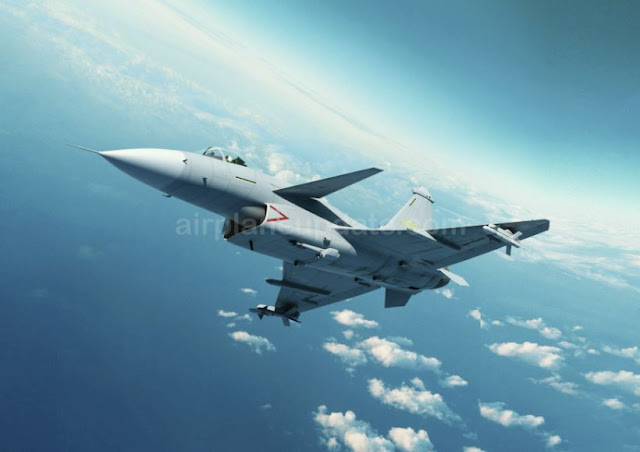
Chengdu J-10 Fighter Jet

Chengdu J-10 Specs

The structure of the Chengdu J-10 fighter is based on a tail-less delta (triangular planform) wing, foreplanes and vertical tail sweptback. There are two fixed ventral fins that tilt outward (at the bottom of the body) near the tail. The size and design of the J-10 is very similar to the Israeli Aircraft Industries Lavi fighter, while the technology is very similar to the technology of the USAF F-16 aircraft.

The J-10 fighter is equipped with a tricycle-type landing gear. The nose unit has twin heels and pulls back and the main unit pulls forward. This aircraft has a parachute for landing.

The Chengdu J-10 can carry a maximum of 4,950 liters of internal fuel, consisting of 3,180 liters in the wing tank and 1,770 liters in the fuselage tank. The fixed refueling probe for refueling in the aircraft is mounted halfway to the front side of the aircraft port and directly in front of the pilot. The J-10 air refill came from the Xian H-6U tanker. Additional fuel can be carried in auxiliary tanks in the midline below the fuselage and in the deepest pairs of three sets of wing hooks.

Chengdu J-10 Engine

The Chengdu J-10 fighter is powered by an AL-31 turbojet engine supplied by Saturn Lyulka. The first prototype and series aircraft from production aircraft were equipped with AL-31FN which developed 79 kN and 123 kN with afterburn, and which are currently used in Chinese Su-27 and Su-30 Air Force aircraft.

A more powerful and sophisticated J-10 variant, the Super J-10 is equipped with AL-31FN M1 supplied by Saturn Lyulka. The AL-31FN M1 delivers 132.5 kN and is equipped with a full authority digital engine control and four-way rotary exhaust nozzle for vector thrust.

The maximum speed of a Chengdu J-10 fighter is 2,327 km/ h at altitude. Its maximum speed at sea level is 1,470 km/ hour. The aircraft's range and combat radius are 1,850 km and 550 km, respectively. The service ceiling is 18,000 m. The aircraft weighs around 9,750 kg and has a maximum take-off weight of 19,277 kg

Chengdu J-10 cockpit

Chengdu J-10 Cockpit and Avionics

The Chengdu J-10 cockpit is equipped with a zero-zero ejection seat. The fighter has a digital fly-by-wire flight control system and HOTAS (hand-on throttle and stick) control where the pilot has every control for battle that is put into two handles.

The cockpit display includes the sight of a weapon mounted on a helmet, a broad head viewing area and one full color screen and two monochrome liquid crystal multifunction screens. Avionics is served by databus 1553B.

Chengdu J-10 Sensor

The J-10 fighter is equipped with a forward looking laser and infrared target pod. China Aviation Industry Corporation I (AVIC I) has displayed a J-10 exhibition model equipped with a targeting pod, which will provide the J-10's ability to use weapons guided by laser and satellite navigation.

Possible pulse Doppler radars include China Type 1473 radar, Phazotron Zhuk-10PD or Russian Zhemchug, JL-10A China, IAI Elta EL / M-2023 Israel or Galileo Avionica Grifo 2000 Italy.

Chengdu J-10 specs

Chengdu J-10 Weapons

The Chengdu J-10 has 11 external hard points: five hard points on the fuselage with one in the center line and a pair of hard lines on each side of the fuselage, and three hard points on each wing. J-10 warplanes can be armed with air-to-air missiles such as Python 3 PL-8, P-11 or PL-12, laser guided bombs, YJ-8K or C-801K anti-ship rocket missiles, C-801K, C ground attack -802 and anti-ship turbojet-powered missiles manufactured by CHETA, YJ-9 anti-radiation missiles, and 23 mm cannons.

The PL-8 infrared short-range air-to-air missile is manufactured in China under a production agreement licensed by the Chinese Academy (formerly the Luoyang Electronic Optical Technology Development Center) and is a variant of Israel's Python 3 missile. The PL-11 is a licensed manufactured variant of the medium-range Italian Aspide MBDA air-to-air missile.

PL-12 missiles are manufactured in China under a cooperation agreement with Russia. It uses Russian AA-12 Russian Adder missile technology that is configured with a rocket motor developed by China to provide a range of 50 miles and Mach 4 speeds.
Chengdu J-10 Price and Orders

The price of the latest Chengdu J-10 fighter jet is US $ 41 Million. Four J-10 fighter jets are exhibited by the 24th AFPLA combat division. Pakistan will receive the first export version of the J-10, up to 36 aircraft, in 2015. China and Pakistan have worked closely in the development of other fighter aircraft, the light fighter JF-17 or FC-1.

Monday, 16 September 2019

SAAB Gripen Fighter Jet Specs, Cockpit, and Price

01:00
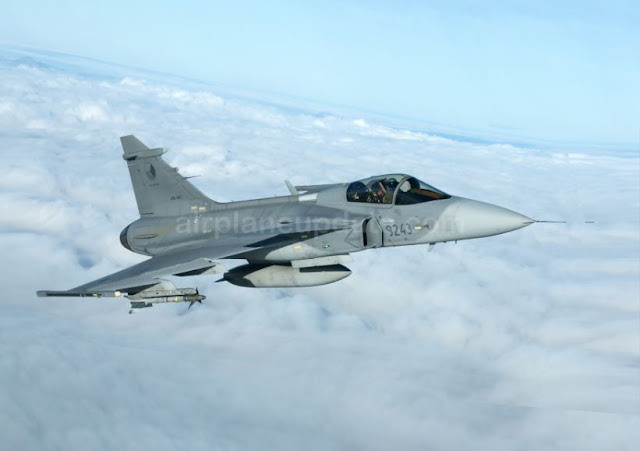
SAAB Gripen Fighter Jet Specs, Cockpit, and Price – SAAB Gripen is a single-engine multi-role fighter aircraft produced by SAAB, Sweden. Gripen was first flown in December 1988 and entered operational service with the Swedish Air Force in 1997. Gripen was the first Swedish production aircraft to be used for interception, ground attack and reconnaissance missions. This aircraft will replace all current variants of the Viggen and Draken fighter aircraft.

Gripen fighter jets combine new capabilities in software-controlled avionics, modern materials, more advanced aerodynamic designs, and machines with fully integrated systems. Gripen was able to fly at supersonic speeds above Mach 1.2 in January 2009 without using an afterburner, thus proving superiority of range and higher fuel savings.

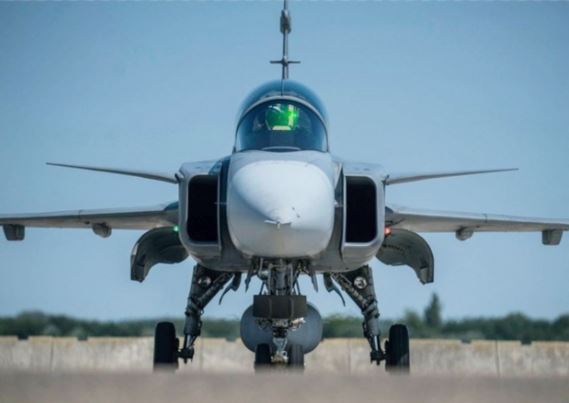
SAAB Gripen Fighter Jet

SAAB Gripen Specs and Variants

Gripen fighter jets are designed with unstable canards. Canards provide high pitch rates and low resistance, allowing the aircraft to fly faster, farther and carry more load.

The combination of the delta wing and Kanard gives Gripen better performance in terms of flying and taking off and landing characters. Avionics which is totally integrated makes this aircraft capable of reprogramming. This aircraft also has an internal electronic warfare device, making it capable of carrying maximum loads without compromising its electronic warfare capabilities.

Gripen is able to take off from the runway along 800 meters. One interesting ability of the Gripen fighter is its ability to land on public roads, which is one of Sweden's defense strategies. Once landing, the aircraft can be refueled and armed again in 10 minutes by 5 ground crews operating from a truck, then Gripen flies back to carry out its mission.

JAS 39A and JAS 39B are early versions of the Gripen fighter jet made by SAAB. JAS 39A is a single seat variant, while JAS 39B is a two-seat variant from Gripen. JAS 39B is equipped with the same avionics and weapons as JAS 39A, with the exception of a gun.

The next development version of the Gripen fighter jet is the JAS 39C and JAS 39D. The JAS 39D is an export standard variant, which was first sent to the Swedish Air Force in September 2002. The JAS 39C has a color cockpit display, on-board oxygen-producing system (OBOGS) and refueling capabilities in flight. Meanwhile JAS 39D is an upgraded version of JAS 39C which has two seats.

The new version of the Gripen fighter jet is Gripen next generation (NG), also developed by SAAB. Gripen NG comes with several interesting features including full interoperability with Nato, high operational tempo, fully digital cockpit with advanced features, network connectivity with multifrequency datalink and modern flight mission systems.

SAAB Gripen Engine

The Gripen fighter jet is powered by a Volvo Aero F414G engine. The engine is able to provide 96 kN thrust (22,000 lb) and is equipped with full authority digital electronic control (FADEC). The digital engine control system automatically monitors engine parameters and starts the backup system if needed. Condition monitoring system registers flight data.

An air-to-air refueling probe is drawn into the aircraft to maintain its aerodynamic profile. The longer flight time achieved by using air-to-air refueling results in pilots requires a greater supply of oxygen, so an installed oxygen generating system (OBOGS) has been installed.

The maximum speed of the Gripen fighter jet is 2,470 km/ hour. The combat radius and ferry range of the aircraft are 800 km and 3,200 km, respectively. The service ceiling is 15,240 m. This aircraft weighs around 5,700 kg and the maximum take-off weight is 14,000 kg.

SAAB Gripen cockpit

SAAB Gripen Cockpit and Avionics

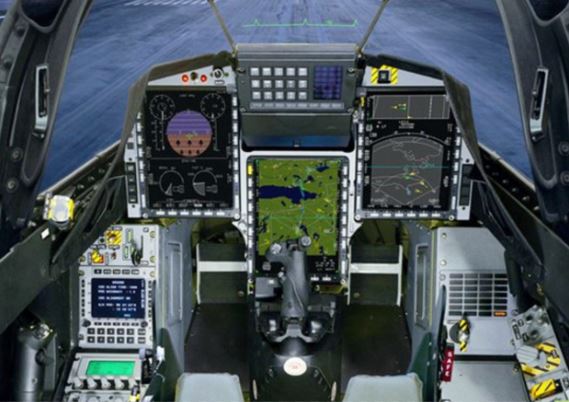
The Gripen cockpit is equipped with a SAAB Avitronics EP-17 series of electronic displays, with three multifunction screens and a 22x28 degree wide-angle head-diffraction display. The central head-down screen provides tactical data superimposed on a computer-generated map. The screens on the left and right provide flight data and target data from the sensor suite.

BAE Systems and SAAB Aerospace, with Denel Cumulus from South Africa, have developed an integrated helmet-mount display (IHMD) system for Gripen, known as Cobra. IHMD is the development of a Striker helmet developed for Eurofighter Typhoon. Cobra installed at Gripen for South Africa. The Swedish Air Force also ordered the system in October 2007.

The flight control system is a digital triplex fly-by-wire system from BAE Astronics and Lockheed Martin. Time-critical system controls (for example, weapons and communications) are grouped in throttle and stick controls for hands-on throttle and stick (HOTAS) operations.

The avionics suite mounted on the Gripen fighter jet, including the EWS 39 electronic war suite, has been ordered by the Swedish Air Force. EWS 39 is an integrated EW system that provides radar alerts, electronic support measures and chaff and flare dispensers.

The Gripen combat aircraft has a VHF/ UHF transmitter and receiver from SAAB Avitronics, and a Thales TSC 2000 friend or enemy identification system. Air-to-air data links allow real-time tactical data exchange within and between cooperating air units . In the role of attack and reconnaissance, data links allow surface data derived from radar to be transferred from one Gripen to a group of attack aircraft that are stealthy from the radar.

SAAB Gripen Sensor

Gripen fighter jets are equipped with a forward-looking infrared sensor (FLIR) and will have an SAAB IR-Otis infrared search and trace system (IRST). Nine Swedish Air Force Gripens have been equipped with SAAB Avitronics modular reconnaissance pods, which include CA270 reconnaissance / optical infrared sensors. The system entered service in 2006.

The Swedish Defense Material Agency awarded SAAB a 400 million four-year contract in April 2010 to develop a modular reconnaissance pod system (MRPS) that will be installed on the Gripen fighter aircraft.

The Ericsson multi-purpose long distance pulse Doppler PS-05 has an air-to-air operating mode that includes remote search, multi-target track-while-scan, multi-priority target tracking, air combat quick search mode, attack assessment and on beyond the middle update visual missile range (BVR).

Air-to-surface modes include remote search/ target identification, dual priority target tracking, high resolution, real beam mapping, air to surface range and Doppler beam sharpening (DBS).

SAAB Gripen specs

SAAB Gripen Weapons

The Gripen fighter jet has seven external hardpoints to carry loads: one at each wingtip, two under each wing and one in the center of the fuselage. Some of the weapons that Gripen can carry, including air-to-air missiles including the MBDA (formerly Matra BAe Dynamics) MICA, Raytheon AIM-120B AMRAAM and Lockheed Martin/ Raytheon Sidewinder AIM-9L (Designation of Swedish Air Force RB74), as well as missiles AIM-120B AMRAAM and Lockheed Martin / Raytheon Sidewinder AIM-9L (Designation of Swedish Air Force RB74) long range SAAB Bofors / MBDA Taurus KEPD 350 with a range of 350 km, has been successfully tested flying at Gripen.

The sidewinder, mounted on the wingtip, is an attack of all aspects, short-range missiles to improve air combat capabilities. Surface-to-surface missiles include SAAB RBS15F anti-ship missiles guided by radar and Raytheon Maverick missiles. In July 2008, Hungarian Air Force fighters successfully tested the Sidewinder air-to-air missile.

Subsequent versions of aircraft for Sweden will be armed with short-range air-to-air Diehl BGT Defense IRIS-T missiles and MBDA Meteors out of visual range (BVR) air-to-air missiles. IRIS-T shipments began in December 2005. In May 2008, South Africa ordered IRIS-T air-to-air missiles to complete its Gripen fleet until the original Denel A Darter missile entered service.

The built-in high-energy 27 mm Mauser pistol can operate in radar-guided automatic aiming mode. Stand-off dispensers are DWF39 from EADS (formerly DaimlerChrysler Aerospace) and Bofors. The Bofors ARAK 70 rocket pod was cleaned for use at Gripen.

SAAB Gripen Price and Orders

The price of the latest SAAB Gripen fighter jet is around US $ 60 Million. In November 1998, the South African Air Force ordered 28 Gripen multi-role aircraft (19 single seats and 9 double seats). Denel Aviation from South Africa will produce part of the center of the aircraft. The first flight was in November 2005 and deliveries began in April 2008 and will end in 2012. Four aircraft were officially handed over to SAAF in September 2008. The fifth flight was delivered in November 2008.

In June 2004, the Czech Republic signed a leasing agreement with the Swedish Government for 14 new Gripens (12 JAS 39C single seats and two JAS 39D two seats) for a period of ten years. The aircraft were delivered between April and August 2005.

In October 2007, Thailand selected Gripen, with the requirement for 12 aircraft to replace F-5B/ E fighters. An agreement to buy the first six Gripens (four 39C planes and two 39D planes was signed in February 2008. The Thai government approved the remaining six Gripens on February 2009. The aircraft will be sent in 2011.

In August 2010, the Thai Government released THB170bn ($ 5.4 billion) from the 2011 fiscal defense budget to buy the second Gripen batch for the Royal Thai Air Force (RTAF).

SAAB will develop an advanced avionics system for the Swedish Armed Forces Gripen fighter aircraft as part of a two-year Skr450m ($ 56 million) contract awarded in May 2010. The avionics system will include computer systems and displays. The first aircraft upgraded with the new avionics system will start operating in 2020.

Saturday, 14 September 2019

HAL Tejas Specs, Engine, Cockpit, and Price

01:00
HAL Tejas Specs, Engine, Cockpit, and Price – Tejas is a modern single-engine Light Combat Aircraft (LCA) developed by Hindustan Aeronautics (HAL) for the Indian Air Force (IAF) and Indian Navy. The Tejas was developed as a one-seat fighter for the IAF, and a two-seat trainer aircraft. The Tejas fighter is produced to replace the MiG series currently operated by the IAF.

The first LCA Demonstrator I aircraft made its first flight in January 2001, with LCA Demonstrator II flying in June 2002. The first flight of the production version of the Tejas was carried out in April 2007, followed by the trainer version first flight in November 2009.

In October 2014, the first series production Tejas (SP1) successfully completed its maiden flight and was handed over to the Indian Air Force in January 2015. The second series production aircraft (SP2) successfully completed its maiden flight in March 2016.

HAL Tejas Fighter Jet

HAL Tejas Specs

Tejas has a compound delta wing planform to achieve weight reduction. The highly adaptable wing design, combined with the mixed wing body, provides high performance and maneuverability has been enhanced by inherent aerodynamic instability. This design allows the aircraft to be integrated with air-to-surface and anti-ship weapons for multirole and multimission capabilities. Naval variants will have additional features to reduce the landing speed of the aircraft carrier and are equipped with retaining hooks for deck recovery.

The Tejas fuselage is made of lightweight construction materials, including aluminum, lithium and titanium alloys, and carbon composites. The wing structure includes parts and composite ribs with carbon fiber reinforced plastic skin. The fuselage has thin walls and integrally rigid structures, which are designed to sustain internal stress without stiffening debonding. It features complex shapes and contours and is built using integral structures on a large scale.

The Tejas fighter aircraft is equipped with a retractable hydraulic tricycle-type landing gear developed by HAL, which envisions two single main wheels, which pull in and two-wheel gears that can be pulled forward and can be pulled back. Titanium half alloy tubes are used for hydraulic power transmission.

HAL Tejas Engine

The Tejas is powered by a General Electric F404-GE-IN20 turbofan engine with full authority digital engine control. The engine is rated to supply 53.9 kN dry thrust and 85 kN thrust with afterburn. The fuel tank is integrated into the fuselage and wings, and an additional 800 liter and 1,200 liter fuel tank can be installed under the fuselage to expand its range. An in-flight refueling probe was also installed on the right side to further expand the range and durability of the Tejas.

The Tejas fighter has a maximum speed of 2,205 km/ h and a maximum altitude of 15,200 m. The distance of the aircraft is 3,000 km. The service ceiling is 16,500 m and the weight is around 5,450 kg, with a maximum take-off weight of 13,500 kg.

HAL Tejas cockpit

HAL Tejas Cockpit and Avionics

The Tejas glass cockpit is equipped with a head-up display (HUD) and two multifunctional displays (MFD), which provide pilots with the necessary information. HUD displays important information needed in close combat situations. Modern avionics systems and effective pilot-vehicle interfaces are installed in the cockpit. The hands on throttle and stick (HOTAS) concept ensures the availability of all flight controls during bad conditions.

Tejas has an integrated digital avionics suite, configured around the MIL-STD-1553B bus system. 32-bit mission (MC) computers can perform mission-oriented calculations, flight management, reconfiguration/ redundancy management, and in-flight system self-tests.

Input from the pilot, inertia and air sensor data are transferred to the control surface actuator via a digital flight control computer (DFCC). The gyro ring-based inertial navigation system (RLG) integrated with the global positioning system (GPS) provides navigation and guidance. The electronic warfare series, which consists of electromagnetic and electro-optical receivers and jammers, provides soft-kill capability to the aircraft.

HAL Tejas Radar

The advanced multimode radar (MMR) track-while-scan feature that is integrated in the Tejas aircraft, allows the aircraft to track multiple targets simultaneously. It also provides ground mapping and shooting capability.

The sensor suite provides threat detection, and low visual signatures that help the aircraft work better in a closed air combat environment. LCA can also be equipped with additional sensors for guidance, navigation and reconnaissance purposes.

HAL Tejas specs

HAL Tejas Weapons

The Tejas fighter has seven hard points for carrying various types of weapons, such as air-to-air missiles, anti-ship missiles, guided rockets and conventional/ backward bombs. The choice of three hard points under each wing and one under the fuselage allows the aircraft to carry various missiles, bombs and rockets.

Air-to-air missiles include Astra BVRAAM, Vympel R-77 and R-73. Air-to-surface missiles are Kh-59ME TV guided guided missiles and Kh-59MK guided laser guided missiles. The GSh-23 23mm twin-barrel cannon was also mounted on the aircraft.

High maneuverability and enhanced handling capability integrated with sophisticated cockpit, digital avionics, and weapons system interface (WSI) provide effective point-and-shoot capabilities with fast turnaround times.

HAL Tejas Price and Orders

The price of the latest HAL Tejas LCA is around US $ 40 Million. IAF ordered 40 Tejas aircraft, including 20 Tejas MK1 and 20 Tejas MK2. The first 20 fighters will be built according to IOC standards and the rest will be built for FOC configuration. The inaugural flight of the Tejas MK2 is done in 2018. The IAF received four Tejas MK1 aircraft in July 2017.

In November 2016, the Indian Defense Acquisition Board (DAC) completed the acquisition of 83 Tejas MK1A variants, bringing the total number of orders to 123.

Thursday, 12 September 2019

Mikoyan MiG-29SMT Fulcrum Specs, Cockpit, and Price

01:00
Mikoyan MiG-29SMT Fulcrum Specs, Cockpit, and Price – The MiG-29SMT is an improved multi-purpose fighter aircraft of the MiG-29 Fulcrum fighter, designed and manufactured by the Russian Aircraft Company MiG (RAC MiG), which is part of JSC United Aircraft Corporation. The first flight of the MiG-29SMT fighter was carried out in April 1998. The first production began in 2004.

The modernized MiG-29SMT (NATO reporting name: Fulcrum) fighter jet is equipped with high-precision air-to-air and air-to-surface weapons to provide high combat efficiency against air, land and sea-based targets. This includes cockpit and avionics enhancements, additional fuel tanks, improved engines and increased arms transport capacity.

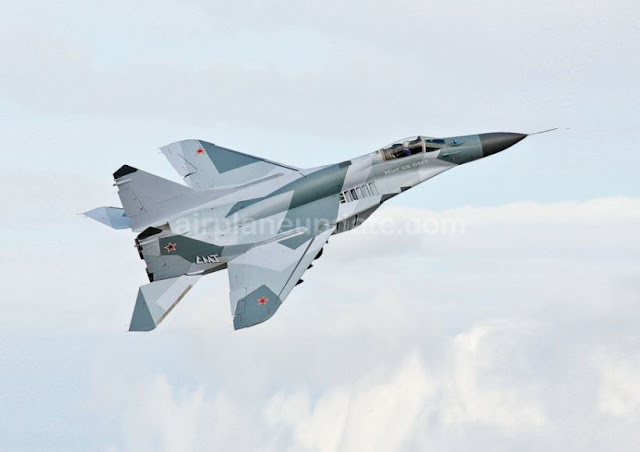
Mikoyan MiG-29SMT Fulcrum

Mikoyan MiG-29SMT Specs

The fuselage structure that has been reinforced by the MiG-29SMT Fulcrum  results in increased flight endurance and longer range. The aircraft has two fixed wings which are swept back with square-cut wingtips. Two vertical stabilizers are mounted at the rear.

Retractable landing gear allows the aircraft to take off and land safely. Meanwhile, the nose landing gear wheel consists of a single two-wheeled bogie, and the two main landing gear wheels each have a single wheel.

Overall, the MiG-29SMT has a length of 17.32 m, a wing span of 11.36 m and a height of 4.73 m. The normal and maximum takeoff weight of each aircraft is 17,000 kg and 22,000 kg.

The aircraft is equipped with retractable refueling probes and different in-flight refueling systems. It can be equipped with additional fuel tanks for more fuel.

Mikoyan MiG-29SMT Engine

The MiG-29SMT Fulcrum fighter jet is powered by two RD-33 series 3 turbofan engines. Each engine is capable of producing takeoff thrust of 8,300 kgf (81.4 kN). The maximum speed of the MiG-29SMT is 2,400 km/ h at altitude and 1,500 km/ h near ground.

The MiG-29SMT's flight range is 1,800 km without an external tank. This range can be extended up to 2,400 km with one tank drop. This fighter can reach a maximum distance of more than 5,000 km when it is equipped with three falling tanks and one single refueling in flight.

Mikoyan MiG-29SMT cockpit

Mikoyan MiG-29SMT Cockpit and Avionics

The new glass cockpit of the MiG-29SMT fighter aircraft is equipped with a data display system consisting of two multi-color MFD-10-6 multifunctional screens 152 × 203 mm (6 × 8-inch) and throttle and stick control (HOTAS). It also incorporates the INS-GPS navigation system.

The MiG-29SMT is equipped with a Zhuk-ME multi-mode multifunction pulse doppler air radar developed by Phazotron-NIIR. The array of slot antennas mounted on the radar increases the range and recognition of targets compared to previous generation radars. With this radar, the MiG-29SMT is able to track up to ten air targets, while involving four targets simultaneously in air-to-air mode.

The MiG-29SMT fighter has an open architecture mission computer with a multiplex data exchange channel for the integration of various avionics systems, based on operator requirements. Optional equipment includes electronic countermeasures (ECM), radio stations, enhanced infrared search and tracking systems (IRSTS), as well as a variety of identification, friend or foe (IFF) transponders.

Mikoyan MiG-29SMT specs

Mikoyan MiG-29SMT Weapons

The MiG-29SMT fighter jet has six external hard points to carry a variety of modern high-precision weapons systems. The MiG-29SMT Fulcrum  fighter jet can be armed with two R-27ER1 (R1), two R-27ET1 (T1) and six medium-range RVV-AE air-to-air missiles; six short-range air-to-air missiles R-73E; four KAB-500Kr/ KAB-500L guided bombs; and the Gsh-301 30 mm internal air gun.

The aircraft also carried two Kh-29TE air-to-surface missiles, two Kh-29L and four Kh-25ML; two Kh-31A anti-ship missiles; and two Kh-31P anti-radar missiles.

Mikoyan MiG-29SMT Price and Orders

The price of the latest Mikoyan MiG-29SMT fighter jet is around US $ 22 Million. Algeria completed contracts for 28 one-seat MiG-29SMT aircraft in March 2006. The MiG RAC sent 15 aircraft in April 2007. The Algerian military refused delivery and canceled the contract in 2008 because of low-quality manufacturing allegations. 28 MiG-29SMT jets rejected by Algeria were sent to the Russian Air Force between 2009 and 2010.

In April 2014, the MiG RAC signed a three-year contract worth more than RUR17bn ($ 473 million) with the Russian Ministry of Defense to send 16 MiG-29SMT aircraft, along with ground support and test equipment, to the Russian Air Force. The first MiG-29SMT fighter aircraft were delivered in January 2016 and the remaining aircraft were delivered at the end of 2016.

Tuesday, 10 September 2019

Shenyang J-11 Fighter Jet Specs, Cockpit, and Price

01:00
Shenyang J-11 Fighter Jet Specs, Cockpit, and Price – Shenyang J-11 is a twin-engine multirole fighter aircraft capable of carrying out air superiority and ground attack missions produced by affiliated Shenyang Aircraft Corporation (SAC) of Aviation Industry Corporation of China (AVIC). This is the default variant of the Sukhoi Su-27SK fighter (Nato code name: Flanker). J-11 is operated by the People's Liberation Army Air Force (PLAAF).

The J-11 fighter made its first flight in 1998. SAC launched the J-11B mock-up in 2002. This is an enhanced multirole variant of the J-11. The company sent the first test aircraft to the China Flight Test Establishment (CFTE) for evaluation in 2006.

Shenyang J-11 Fighter Jet

Shenyang J-11 Specs

J-11 fighter jets are designed based on the Su-27SK, the J-11 fuselage is made of titanium and aluminum alloys. The fuselage part integrates the cockpit, radar section and avionics space. The basic J-11 version incorporates components made in Russia. J-11B is built by itself using the same fuselage and equipped with avionics and weapons systems made in China.

Overall, J-11 fighter jets have a length of 21.9 m, wingspan 14.7 m and height 5.9 m. The wing area of ​​the aircraft is 62 m². This aircraft has a maximum take-off weight of 33,000 kg.

Shenyang J-11 Engine

J-11 fighter jet is powered by two Taulang Lyulka AL-31F turbofan engines or TaiHang FWS-10A. Each engine is capable of producing 75.22 kN/ 89.17 kN thrust and 123 kN/ 132 kN afterburner thrust.

Shenyang J-11 has a maximum speed of 2,900 km/ h (Mach 2.35) and a range of 3,530 km. The maximum flight speed at sea level without weapons and external stores is 1,400 km/ hour. The aircraft can fly at a maximum height of 19,000 m. It has a climbing rate of 300 m/ s.

Shenyang J-11 cockpit

Shenyang J-11 Cockpit and Avionics

The glass cockpit of the J-11 fighter aircraft accommodates a single pilot. It is equipped with a multifunctional multi-color display (MFD), head-up display (HUD), helmet-mounted sight (HMS) and an original digital flight control system.

The J-11 avionics suite integrates the IFF interrogator system, attitude and crown reference systems, automatic direction finders, electro-optical search and tracking systems, INS/ GPS navigation systems, fire control radars and original multifunctional pulse Doppler radars. The onboard automatic monitoring system includes an early warning system, flight information recording system and emergency situation warning equipment.

Shenyang J-11 specs

Shenyang J-11 Weapons

Shenyang J-11 fighter aircraft are equipped with ten hard points capable of carrying a variety of missiles, including air-to-air missiles guided by PL-12, PL-9 short-range, homing-infrared air-to-air missiles (AAM) ), PL-8 air-to-air missiles, medium-range Vympel R-77 air-to-air missiles, Vympel R-27 long-range air-to-air missiles and Vympel R-27 short-range missiles and short-range Vympel R-73 missiles missile into the air.

J-11 can also be armed with a 30 mm GSh-30-1 cannon. The PL-12 guiding system carries high-explosive fragmentation warheads for a maximum range of 100 km. This aircraft also carries a targeted rocket launcher and a clustered bulk bomb.

The electronic defense or countering system above J-11 includes radar warning receivers, chaff and flare discharge systems and radio interference transmitters.

Shenyang J-11 Price and Orders

The price of the latest Shenyang J-11 fighter jet is around US $ 30 Million. Sukhoi and SAC signed a $ 2.5 billion contract for joint production of 200 Su-27SK aircraft as J-11 in February 1996. As part of this contract, Sukhoi was responsible for supplying components to assemble aircraft at SAC.