Monday, 18 March 2019

Bombardier Global 6500 Specs, Interior, Cockpit, and Price

20:00
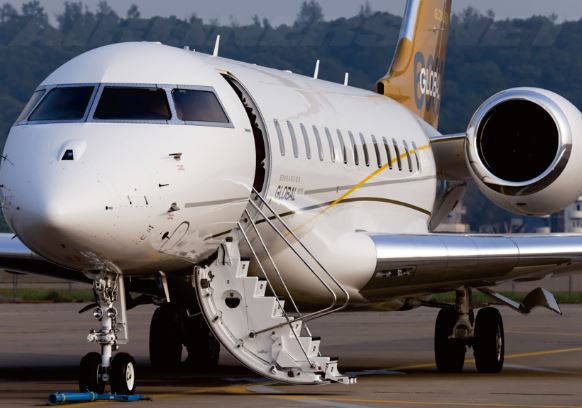
Bombardier Global 6500 Specs, Interior, Cockpit, and Price  Bombardier Global 6500 is a new leading class Business Jet manufactured by Bombardier Aerospace. Jet business is expected to enter service by the end of 2019 and will offer a wide open living room, enhanced interior design, improved performance and a smooth driving experience.

The Bombardier Global 6500 aircraft was launched for the first time at the 2018 European Business Aviation Convention & Exhibition (EBACE2018) in Geneva, Switzerland, in May 2018. This will be able to connect pairs of cities such as Hong Kong or Singapore and London, and Toluca and Madrid.

Bombardier Global 6500

Bombardier Global 6500 Specs

Bombardier Global 6500 is designed to offer superior levels of performance, flexibility and comfort. It will feature innovative wing designs with fully profiled trailing edges, as well as advanced engine core and ultra-slim nacelle lines. The aircraft will be 30.5m-long and 7.8m-tall with a wingspan of 28.7m.

This aircraft can fly at an initial cruising altitude of 12,497 m and reach a maximum operating height of 15,545 m. This will have a maximum cruising speed of Mach 0.90 and a maximum range of 6,600 nautical miles (nm). The jet takeoff distance is 1,942 m, while the landing distance is around 682 m.

Bombardier Global 6500 aircraft has a maximum payload of 2,617 kg, a maximum fuel weight of 20,434 kg, a base operating weight of 23,691 kg and a weight of a maximum of 45,246 kg. The maximum takeoff weight is 45,132 kg, while the maximum landing weight and zero fuel weight are estimated at 35,652 kg and 26,308 kg, respectively.

Bombardier Global 6500 specs

Bombardier Global 6500 Engine

Bombardier Global 6500 will be powered by two Rolls-Royce Pearl 15 engines, which can generate thrust of 67.3kN during take-off. Pearl Rolls-Royce 15 machines have been specifically developed for Bombardier Global 5500 and Bombardier Global 6500 aircraft.

Bombardier Global 6500 cabin

Bombardier Global 6500 Cabin 

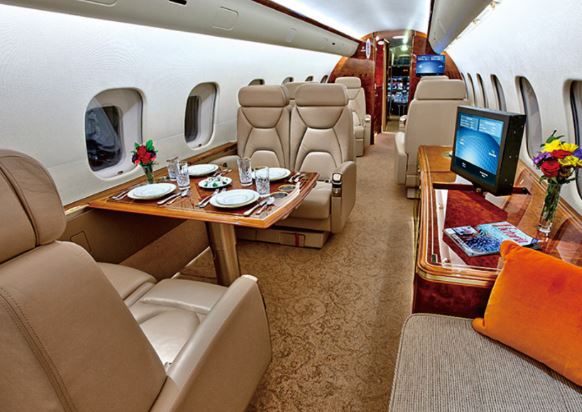
Bombardier Global 6500 aircraft will feature spacious cabins equipped with the latest technology and new seating delivery. The cabin will be 13.18m long, 2.41m wide and 1.88m high, and will be able to accommodate up to 17 passengers.

In addition, the Bombardier Global 6500 business jet will be installed with the Nuage seat that redefines the industry, which will feature a tilt link system for deep backs, floating bases for fluid movement and tilting the headrests to increase comfort.

This aircraft will feature a variety of cabin areas, including entrance and crew suites, club suites, conference suites, private suites and en suites. The luggage compartment will also be integrated into the cabin area.

Ka-band aircraft technology provides very fast internet connectivity, which is approximately 35 times faster than other internet flight systems that use the latest satellite technology. It is expected to facilitate streaming on flights, video conferencing and downloads.

The cabin management system inside the aircraft will be supported by fiber optic technology and is expected to provide a high-definition entertainment experience for passengers.

The first 4K capable cabin will provide connectivity in the fastest flights, while a centralized media space will offer a storage area to connect all personal electronic devices.
Bombardier Global 6500 cockpit

Bombardier Global 6500 Cockpit and Avionics

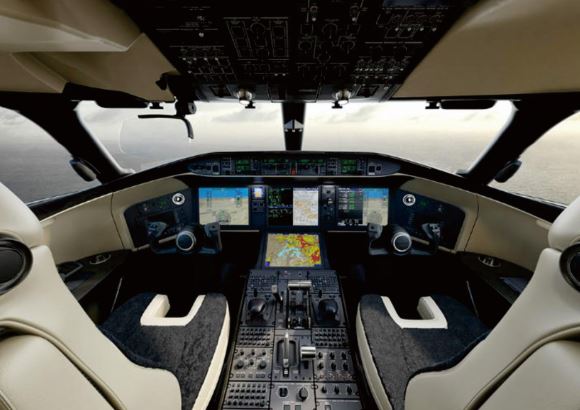
Bombardier Global 6500 is set to display the Bombardier's Vision flight deck, which integrates four large display screens, a head-up display (HUD) and a combined vision system (CVS).

The aircraft will also be equipped with a graphical flight planning system, airport movement map (AMM) and MultiScan weather radar.

In addition, Bombardier Global 6500 will be integrated with the latest performance-based navigation aids, including wide area augmentation systems (WAAS), localiser performance with vertical guidance (LPV) and area navigation systems (RNAV), along with navigation required in the performance approach (RNP) and required RNP authorization (AR).

The jet is also expected to incorporate data communication link pilot controller (CPDLC), datalink and high-speed satellite communication technology (SATCOM).

Bombardier Global 6500 Price and Orders

The price of the latest Bombardier Global 6500 aircraft is US $ 56 Million. Bombardier signed a letter of intent (LoI) with HK Bellawings Jet for the delivery of up to 18 Bombardier Global 6500 aircraft in May 2018.

Sunday, 17 March 2019

Bombardier Global 6000 Specs, Interior, Cockpit, and Price

20:00
Bombardier Global 6000 Specs, Interior, Cockpit, and Price – Bombardier Global 6000 is the most luxurious business jet built by Bombardier Aerospace. The aircraft entered service in the first half of 2012. The aircraft received Transport Canada (TC) certification for its flight deck in June 2011. Bombardier Global 6000 received airworthiness certification from the European Aviation Security Agency (EASA), FAA (Federal Aviation Administration) and Combined Aviation Authority Europe (JAA) in February 2012. It also received certification in Australia and many other countries.

In August 2011, ViaSat was awarded a contract to provide air communication terminal equipment for high-speed internet packages at Bombardier Global 6000. The equipment includes Ku-band communication systems and EMS router equipment.

Bombardier Global 6000

Bombardier Global 6000 Specs

Bombardier Global 6000 is an enhanced version that replaces Bombardier Global Express XRS and Global 5000. The length of the Bombardier Global 6000 aircraft is 30.3m, the overall height is 7.8m and the wingspan is 28.7m. The aircraft has a spacious cabin, an expanded cockpit, and sophisticated communication equipment. The wings are designed for speed and to reduce the effects of turbulence.

Bombardier Global 6000 can fly at altitudes of up to 51,000 feet and has a range of 6,000 nautical miles at speeds of Mach 0.85. The maximum takeoff weight is 45,246 kg and the maximum landing weight is 35,652 kg. The takeoff and landing distances are 6,476 feet and 2,670 feet respectively. The maximum load that can be transported is 3,770lb (1,710kg) and the maximum fuel load is 2,470lb (1,120kg).

Bombardier Global 6000 Engine

Bombardier Global 6000 aircraft is powered by the Rolls-Royce Deutschland BR710A2-20 turbofan engine which provides 65.6 kN thrust when taking off. It can fly with a maximum cruising speed of 950km / h and has an average speed of 907km / hour.

Bombardier Global 6000 cabin

Bombardier Global 6000 Cabin

Bombardier Global 6000 aircraft has a large cabin, which is 14.7m long and 2.49m wide with a floor area of ​​31.1 square meters and a volume of 60.6 cubic meters. The spacious and comfortable cabin can accommodate eight to 19 passengers and two to four crew members. It is equipped with an Ethernet-based cabin management system that functions through on-board local area networks (LANs) and wireless LANs.

Bombardier Global 6000 cockpit

Bombardier Global 6000 Cockpit and Avionics

Bombardier Global 6000 is equipped with a vision flight deck designed for a completely new cockpit experience. This cockpit is equipped with Rockwell Collins pro line fusion suite avionics, which features four 15.1-inch liquid crystal display (LCD) screens, a third generation enhanced vision system (EVS), a head display system (HUD) and a synthetic vision system (SVS) )

This aircraft has an onboard maintenance system (OMS), a superior diagnostic and problem solving tool. It is also equipped with an integrated cursor control panel, a synthetic enhanced visual system and paperless operation that is activated by multiple electronic graphics.

It is integrated with the future air navigation system (FANS), pilot-pilot datalink communication (CPDLC), wide area augmentation system (WAAS), localiser performance with vertical guidance (LPV) and MultiScan weather detection system.

Bombardier Global 6000 specs

Bombardier Global 6000 Price and Orders

The price of the latest Bombardier Global 6000 aircraft is US $ 60.5 Million. In March 2011 NetJets placed a $ 2.8 billion order for 120 Global business jets, which included 30 Bombardier Global 6000 jets. The aircraft was configured to provide seating for 13 passengers. NetJets received the first Bombardier Global 6000 aircraft in November 2012. Shipments of the remaining aircraft are expected to be completed by the end of 2012.

In March 2012, the first Bombardier Global 6000 aircraft was sent to Wideworld Services. It was the first aircraft equipped with Vision Flight Deck. AVWest, an Australian jet operator, ordered $ 292.5 million, in March 2012, to ship five Bombardier Global 6000 aircraft.

In June 2012, Bombardier received an order to send three Global 6000 jets together with five Global 800 jets to undisclosed customers. The total order is worth $ 507m. In November 2012, VistaJet made a $ 7.8 billion order, which included the delivery of 25 Bombardier Global 6000 jets. The shipment began in 2014.

Saturday, 16 March 2019

Bombardier Global 5000 Cabin, Specs, Interior, Cockpit, and Price

20:00
Bombardier Global 5000 Cabin, Specs, Interior, Cockpit, and Price – Bombardier Global 5000 is a super large business jet with a range of 8,889km (4,800nm), capable of flying directly from continental Europe to Central America at high speed. This aircraft has a maximum cruise speed of Mach 0.88 (935km / h). Bombardier Global 5000's design is the development of the Global Express corporate business jet that has proven to be highly reliable with a smaller airframe.

Bombardier Aerospace began market evaluation and design studies for new high-speed long-distance business jets in 1999 and, in February 2002, the Bombardier Global 5000 aircraft was officially launched. Shortly after the announcement of the development program, the TAG Aeronautics company placed the first order for the aircraft.

Bombardier Global 5000 made its maiden flight in March 2003. The Transport Canada (TC) type certification was received in March 2004, the European Joint Aviation Authority (JAA) in July 2004 and the US Federal Aviation Administration (FAA) in October 2004. The aircraft entered service in April 2005, with corporate customers in the Middle East. The aircraft adheres to JAR OPS 1,245 ETOPS (remote twin engine operation) 180 minute guidelines for business jets. More than 60 Bombardier Global 5000 aircraft have been delivered.

Bombardier Global 5000

Bombardier Global 5000 Specs

In February 2008, Bombardier Aerospace announced that Bombardier Global 5000's reach had been extended to 741 km to 9,630 km. This has been achieved by increasing the maximum takeoff weight (MTOW) to 41,957 kg, allowing higher fuel capacity. Increased range will be standard on all production aircraft starting in 2012.

Takeoff requirements and landing lines allow operators to land on smaller airfields closer to the business area. A balanced field length of only 1.525m (5,000 feet) is required for a mission with a maximum range of 8,889 km at Mach 0.85.

In June 2005, Bombardier Global 5000 set a new speed record for business jets flying 6,500 km (3,510 nm) nonstop from Chicago to Paris in seven hours 15 minutes. This aircraft has four crew plus a 727kg load (equivalent to eight passengers) and runs at Mach 0.88.

Bombardier Global 5000, which is equipped with the Electro-thermal Ice Protection System (EIPS), conducts several flight tests in ice conditions in Alaska.

Bombardier Global 5000 specs

Bombardier Global 5000 Engine

Bombardier Global 5000 has two turbofan Rolls-Royce BR710A2-20 engines mounted on the rear side of the body. The engine, which was ranked 66.1kN on takeoff, was equipped with full authority digital engine control (FADEC). The two-petal thrust reversing configuration was designed by International Nacelle Systems.

The fuel system has a total capacity of 16,329 kg of fuel and includes two integral wing fuel tanks, a central tank and an additional tank mounted on the rear of the fuselage. The fuel management system controls the flow and distribution of fuel. A single refueling point is located on the right wing and fuselage fairing. The aircraft is equipped with Walter Kidde Aerospace fire detection and fire fighting systems.

An additional power unit, RE220GX from Honeywell, is mounted on a tailcone and provides power to power the main engine. Messier-Dowty provides an integrated landing gear system.

Bombardier Global 5000 cabin

Bombardier Global 5000 Cabin

Bombardier Global 5000 cabin is tailored to meet operator requirements and can be configured for up to 19 passengers. The typical cabin configuration, provides a comfortable and productive work environment for up to eight passengers and three crew members, arranged in three parts with crew and staff rest areas, complete offices and conference rooms or state rooms.

The air-conditioned luggage compartment at the rear of the cabin can be accessed during flight. The cabin has been luxuriously finished and provides a very quiet and comfortable flight. Cabin noise level is less than 52dB.

Integrated cabin electronic system Rockwell Collins Airshow 21 provides digital Ethernet-based information distribution for business connectivity. The integrated cabin diagnostic system manages the cabin environment system. Liebherr Aerospace Toulouse supplies air and cabin pressure control systems.

The Global 5000 cabin interior was designed by Bombardier and C & D Aerospace and has new seats with backrests and contoured backs, and as an option, Visco Elastic cushions designed by NASA. The pillow adjusts to the body shape of each passenger when activated by body heat. Goodrich Hella designed light emitting diode (LED) lighting.

Bombardier Global 5000 cockpit

Bombardier Global 5000 Cockpit and Avionics

The dark cockpit is ergonomically designed to minimize pilot workload. The Bombardier Global 5000 aircraft is equipped with Honeywell Primus 2000XP avionics with a dual flight management system, a dual Category II autopilot system and an automatic flight control system. The dual electronic flight information system (E / FIS) has six 8in × 7in multifunction screens. In September 2007, Bombardier announced the new Global Vision flight deck for Bombardier Global 5000 and Global Express aircraft.

The navigation system includes color weather radar, triple laser gyroscope reference system, global positioning system, automatic direction finder, radio ranger system / integrated omnidirectional VHF landing instrument (VOR / ILS), distance measuring device (DME), TCAS II traffic collision warning and avoidance systems and close warnings.

Bombardier Global 5000 aircraft are also equipped with Honeywell's central aircraft information and maintenance system (CAIMS), which provides health, use and service data, enabling faster completion of treatment.

Thales Avionics Canada and CMC Electronics (formerly BAE Systems Canada) have developed the Bombardier enhanced vision system (BEVS) which will be available as an option on Bombardier Global 5000. BEVS, which integrates Thales head-up display 40 ° × 26 ° (HUD) and sensor infrared SureSight CMC, increases pilot situational awareness in low visibility conditions.

The Fusion Rockwell Collins Pro Line avionics range includes: four 15-high diagonal high-resolution liquid crystal display (AMLCD), head-up guidance systems (HGS), personalized display information, electronic checklists, maps with graphical flight planning, air navigation future systems, datalink communication controllers, MultiScan RTA-4100 weather detection systems and synthetic vision systems.

This will also include the Bombardier enhanced vision system (BEVS). Global Vision received certification from Transport Canada (TC) in June 2011. The system will enter service at Global Express XRS with customers launching the London Air Services of Canada in 2012.

Bombardier Global 5000 is equipped with a communication system that includes Rockwell Collins HF and VHF communications with dual radio management, six channel satellite communication systems, Coltech's five-channel selective calling system and emergency transponder locator. The aircraft is equipped with Honeywell flight data recorders and cockpit voice recorders. Teledyne Magnastar Office-in-the-Sky's data and voice communication links can be installed.

Bombardier Global 5000 Price and Orders

The price of a Bombardier Global 5000 aircraft is US $ 50 Million. In October 2004, the US FAA ordered Bombardier Global 5000 to be used as an air laboratory for flight testing. The aircraft was sent in October 2005.

Bombardier sent the first Global 5000 in mainland China to Reignwood Group in July 2009. The first Bombardier Global 5000 aircraft was sent in Argentina to unknown customers in June 2010. Qatar Airways ordered two planes in July 2010. The first was sent in December 2010 and the second was scheduled to be sent in 2011. MNJ Jet signed a contract for one Bombardier Global 5000 in September 2010.

In November 2010, Niki Lauda Formula One champion NL Holding ordered one Bombardier Global 5000 aircraft with the new Global Vision flight deck. The aircraft is scheduled to be delivered in 2012. 100 Bombardier 5000 began operations with US-based Heritage Aviation in March 2011.

Bombardier sent the first of the four 5000 Global jets to the German Ministry of Defense Special Mission Wing (September) in September 2011. This aircraft will be used for VIP transportation and medical evacuation operations (MedEvac).

Friday, 15 March 2019

Bombardier Learjet 75 Specs, Interior, Cockpit, and Price

20:00
Bombardier Learjet 75 Specs, Interior, Cockpit, and Price – Bombardier Learjet 75 is the latest business aircraft developed by Bombardier Aerospace. It has new design features such as modern interiors, improved takeoff performance, high cruise speeds at higher altitudes, increased fuel efficiency and lower operating costs, as well as greater flexibility and luxury.

Bombardier launched Learjet 75 at the European Business Aviation Convention and Exhibition (EBACE) in Geneva in May 2012. The new aircraft was built in Wichita, Kansas, USA. Bombardier Learjet 75 aircraft received the Federal Aviation Administration (FAA) certification in November 2013 and the European Aviation Safety Agency (EASA) certification in September 2014. Bombardier Learjet 75 aircraft began operations in November 2013.

Bombardier Learjet 75

Bombardier Learjet 75 Specs

Bombardier Learjet 75 is an upgrade from the Learjet 45XR, modified to improve performance. Bombardier Learjet 75's airframe design is also based on the 45XR. The new aircraft has a length of 17.56 m and an overall height of 4.31 m. The overall wingspan is 15.51m with a wing area of ​​28.95m².

The new aircraft adopts a tilted winglet from Global 7000 and 8000 aircraft, which results in increased aerodynamic efficiency. The aircraft cabin is based on the Learjet 85 aircraft. The design allows for increased savings.

Bombardier Learjet 75 aircraft offers a maximum range of 2,040nm at cruising speeds of up to Mach 0.75. It has a maximum cruising speed of 860 km / h and a service ceiling of 16,000 m. The landing distance is 811m, with takeoff distance of 1,353m. It has a base operating weight of 6,300kg and a maximum landing weight of 8,709kg.

Bombardier Learjet 75 specs

Bombardier Learjet 75 Engine

Bombardier Learjet 75 is powered by two Honeywell TFE731-40-BR engines with a maximum thrust of 17.1kW. The new Honeywell engine replaces the 20BR engine used on the Learjet 45XR aircraft. The engine provides a 12% increase in long takeoff performance. A slight increase in fuel efficiency (4%) and field performance under hot and high conditions (9%) will also be achieved by new engines.

Bombardier Learjet 75 cabin

Bombardier Learjet 75 Cabin

Bombardier Learjet 75 cabin offers increased comfort and style of seats. It has executive seats to accommodate up to eight passengers. The hotel has LED lighting, luggage space and ample space for catering, work and storage. The cabin length, width and height are 6.02 m, 1.56 m and 1.5 m, respectively. The overall cabin volume is around 11.61 m³.

This cabin is also equipped with a 7in touch screen on the seat with full audio and video control, 12.1in HD screen monitor, HD backbone and ethernet, and an audio system complete with hidden trim panel speakers.

Bombardier Learjet 75 cockpit

Bombardier Learjet 75 Cockpit and Avionics

The flight deck of the Bombardier Learjet 75 Vision offers greater control and comfort. It has the latest LPV approach navigation and ADS-B OUT broadcast communication capabilities to reduce pilot workload and improve situational awareness. The flight deck is equipped with leather trim and chrome seats for pilots.

The Bombardier Learjet 75 aircraft also includes the fully integrated Garmin G5000 digital avionics. It includes three high resolution 14in screens, a touch screen controller, and a synthetic vision system.

The avionics suite also features a dual flight management system, graphical flight planning, solid state weather radar (GWX 70), and a surface awareness system. Other features include aircraft position on taxiways, digital audio systems, and datalink capabilities.

Bombardier Learjet 75 Price and Orders

The price of the latest Bombardier Learjet 75 aircraft is US $ 13.8 Million. In December 2012, Bombardier received orders worth around $ 81 million for the delivery of six Bombardier Learjet 75 business aircraft from undisclosed customers.

London Air Services (LAS), a Canadian company ordered five Bombardier Learjet 75 aircraft worth $ 65 million in June 2012. Flexjet made a firm order for the delivery of 25 Bombardier Learjet 75 business planes in September 2013.

Bombardier Learjet 75 was the first EASA certified to be sent to the France-based Roullier Group in September 2014. The 75th Bombardier Learjet 75 was sent to Aurora Jet Partners in February 2016.

Zenith Aviation received two Bombardier Learjet 75 planes in September 2016 and two others in October 2017. Bombardier sent the second Learjet 75 to Leggett and Platt in June 2017. The first Bombardier Learjet 75 for Brazilian customers was sent in August 2017.

Thursday, 14 March 2019

Sukhoi Su-80 Specs, Cabin Interior, Cockpit, and Price

23:17
Sukhoi Su-80 Specs, Cabin Interior, Cockpit, and Price – Sukhoi Su-80 is a twin-engined take-off and landing (STOL) double-engined aircraft which is mainly used for cargo and passenger transportation. It was designed and developed jointly by Sukhoi Company (JSC) and the Komsomolsk-on-Amur Aircraft Production Association (KnAAPO), Russia. The aircraft can accommodate two crew (pilots and co-pilots) and cargo weighing 3,300kg.

The first flight was carried out on September 4, 2001. A total of eight Sukhoi Su-80 aircraft currently operate throughout the world. Sukhoi Su-80 can fly both during the day or night and bad weather conditions on commuter and regional air routes. This is certified according to the AP-25 airworthiness standard for transport aircraft.

Sukhoi Su-80 has three variants, namely Sukhoi Su-80GP, Sukhoi Su-80PT and Sukhoi Su-80TD. Sukhoi Su-80GP is a cargo or passenger aircraft. Sukhoi Su-80PT, is a patrol or transport aircraft that is used for national land and sea border operations that can transmit high-quality relevant data to earth stations, free fire alarms and destroy intruders. And Sukhoi Su-80TD is a troop carrier or military cargo aircraft that can be used to conduct parachute training, carry out casevac / medevac missions and carry out other special missions.

Sukhoi Su-80

Sukhoi Su-80 Specs

Sukhoi Su-80 features a pressurized aircraft, which supports wings and poles. The fuselage section accommodates radar bays, cockpits, bay avionics and mixed cargo cabins. Cargo roads located on the fuselage are used to load and lower cargo and to ride passengers. Sukhoi Su-80 has the height and width of the fuselage, respectively 2.35 m and 2.40 m. The distance of the fuselage is 0.56 m.

Among the eight aircraft produced, the first four pre-series are short aircraft. Of the four remaining aircraft, the fifth, sixth and seventh prototype aircraft were extended at 1.4m (4ft 7in), providing an additional row of passenger seats.

Sukhoi Su-80 is equipped with three-wheel landing gear which has tread dimensions and wheel base from landing gear systems which are 6.3 m and 6.34 m respectively. The landing gear can be pulled along with the nose support. Low-pressure tires in the landing gear system allow aircraft to land on small airfields, and runways that are not paved, ice, and snowy. It can operate at various temperatures and G-limits.

Sukhoi Su-80 specs

Sukhoi Su-80 Engine

Sukhoi Su-80 is powered by two General Electric CT7-9B turboprop engines in the bay at the front of the boom. The length and diameter of the machines are 2.43 m and 0.73 m, respectively. Each machine has six stages of compressor and a dry weight of 366kg. Each machine can produce 1.305kW of electric power. The machine has been designed to be very reliable and increase operational availability, thereby reducing overall costs.

The Sukhoi Su-80 can fly at a maximum speed of 470km / hour. The cruise speed is 430 km / hour. The height and ceiling of Sukhoi Su-80 services are 6,000 m and 8,000 m respectively. The normal range and ferries of each aircraft are 1,300 km and 3,250 km. This aircraft weighs around 3,300 kg and the maximum takeoff weight is 14,200 kg.

Sukhoi Su-80 cabin

Sukhoi Su-80 Cabin

Sukhoi Su-80 has a comfortable 27m3 cabin. The spacious and comfortable cabin can accommodate pilots, co-pilots and 30 passengers with more legroom for all passengers. One chair is also available separately for flight attendants. Special equipment in the aircraft cargo space allows it to use handling facilities.

The cabin length and height are 7.75 m and 1.82 m, respectively. The maximum width of the cabin is 2.17m and the floor width is 1.75m. The cabin also consists of a cargo ramp of 1.82m x 1.89m for loading / lowering loads and passenger entry, and an emergency exit 1.27m x 7m for passengers.

Sukhoi Su-80 cockpit

Sukhoi Su-80 Cockpit and Avionics

The Sukhoi Su-80 is equipped with a navigation and air indication system, an air signal system, an automatic radio compass, an altitude sensing system and radio speed measurements, and a distance measuring device.

Sukhoi Su-80 has a flight navigation system designed and produced by Electroavtomatika JSC. Two multimode computer consoles, four multifunction button displays (MFD), integrated aircraft system screens and needle type instruments together form the Sukhoi Su-80 navigation system.

The navigation system receives, processes and displays all flight data captured by radar. It also tells the crew about damage and provides assistance in eliminating errors that occur due to malfunction.

Other avionics installed in the Sukhoi Su-80 include the SBKV-P resignation system and altitude system, VIM-95C (VOR / ILS / SP / MRK) navigation and landing systems, SO-94R (UVD) radar responder, 4205 national aircraft which airs. identification of respondent and RSBN-85C meteorological short distance navigation system.

Sukhoi Su-80 Price and Orders

The price of a Sukhoi Su-80 aircraft is US $ 6 Million. The Sukhoi company has received commercial orders for Sukhoi Su-80 from various companies, including Blagoveshchensk Airlines, ChukotAvia, Dalavia, Petropavlovsk-Kamchatski and Polar Airlines.

About ten Sukhoi Su-80 aircraft were ordered by Kazakhstan Border Guard. The Air Force of the Chinese People's Liberation Army, the Jordanian Air Force, the Malaysian Air Force and the Republic of Korea Air Force also plan to buy Sukhoi Su-80 aircraft.